Research doesn’t enable products it enables people.
When the path forward feels uncertain, stagnant, or just uninspired, I provide the high-fidelity insights needed to make confident decisions.
I’ve worked with…


Moving organizations from assumptions to evidence.
I’m Edward. For the last decade, I’ve been embedding mixed-methods research into organizations to create user-centered, evidence-based strategy.

Case Study: Microsoft Teams Meetings
Restoring Metric Integrity to the Meeting Join Flow
Leadership was operating on a metric that was mischaracterizing user behavior and they didn’t know it; including the product teams’ core OKRs.
What I did:
Uncovered the root-cause of drop-off in the funnel
Re-defined the team’s metrics and OKR
Repaired the organization’s foundational (mis)understanding of our customers’, and our business’s, real needs
Identified, conceptualized, and prioritized new features into the roadmap
Case Study: Bolt OU
New Demand for Ridehailing
I was the researcher for Bolt’s most business-critical vertical: ride-hailing. Operating within a high-velocity, low-margin, global mobility ecosystem and two-sided marketplace, my scope covered a roadmap for millions of users across diverse international markets. I lead research that bridged the gap between digital interface, the real-world operational service quality, and our customer’s lives.
Case Study: Best Buy
The Future of the Employee Experience
90,000 store employees (sales associates, warehouse staff, Geek Squad agents) were using a fragmented ecosystem with over 15 different digital tools alongside manual processes.
How might we create a more cohesive tooling across their digital and paper systems to enable better, more effortless work.
“The shortest distance between two people is a story.”
-- Patti Digh
Data informs but stories move organizations.
As a trained storyteller, I bring the story of your user to the center of everything.
My experience presenting on large stages, conference halls, and board rooms, enables me to weave data into evidence-backed, durable narratives that stick and spread throughout organizations.
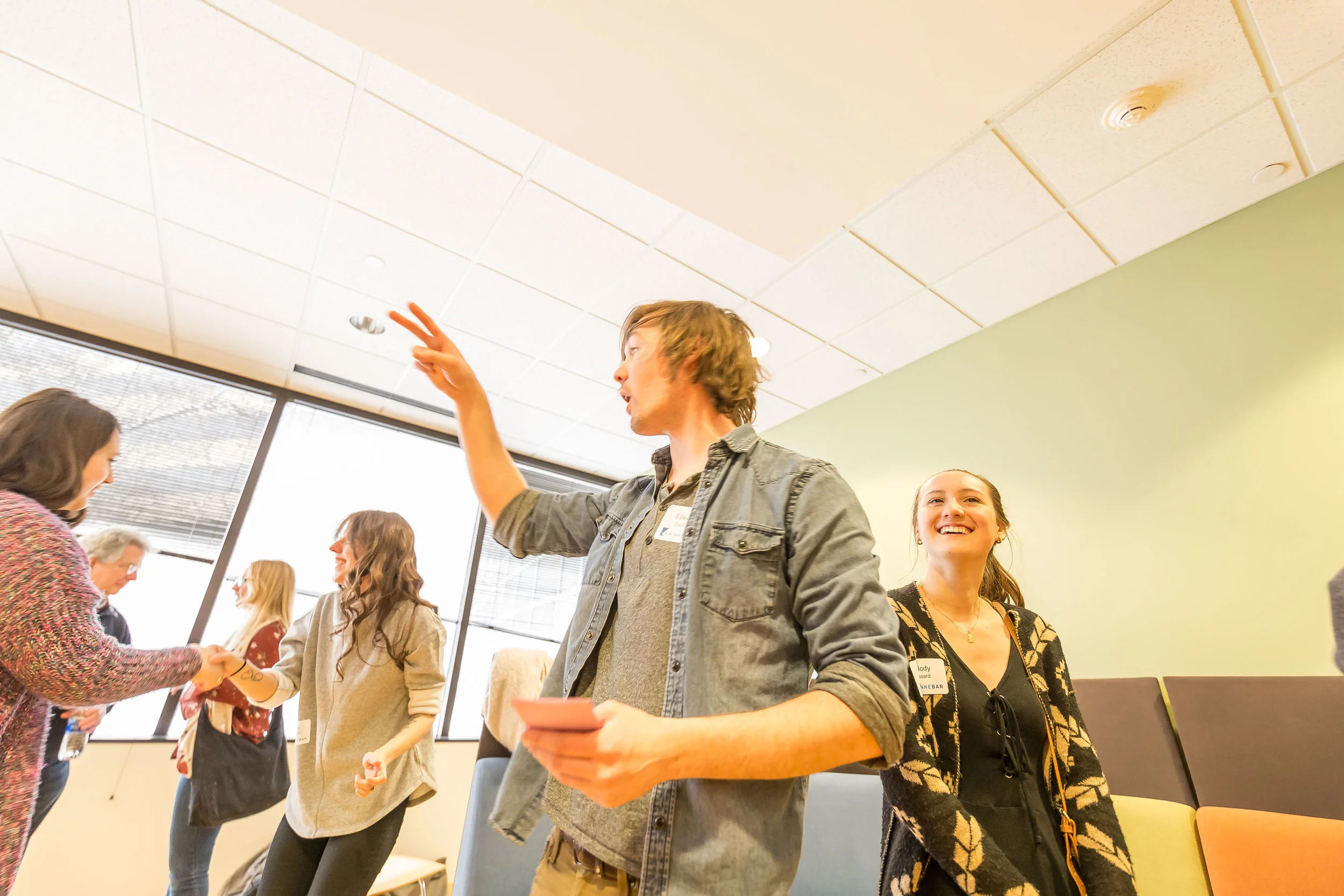


“Education is not the filling of a pail, but the lighting of a fire.”
-- Plutarch

Research is
fuel for action.
As a former educator, I deliver deep comprehension of research insights with down-to-earth, memorable reporting that inspires action.
Prior to working in technology, I spent 7 years working as an educator in high school, middle school and early education classrooms; creating and delivering custom lesson plans.
Would you rather your students remember the exact date of the start of WWII?
Or, the larger lessons that period of history teaches us?
I use this mindset to ensure team’s focus on what really matters. Not just findings/data but the all-important “what it means to us”.
Professional References
“Ed is an excellent communicator helping the business see a complete picture in order to address major breakdowns in the customer journey. He is smart, dependable and does not hesitate to go the extra mile.”
Aishwarya Pesala
Senior UX Designer, Thomson Reuters

“Ed is one of the most creative, out-of-box thinkers I know and brought much inspiration to our team. He carries with him a contagious positive energy that knit our team together.”
Esther Jeong
Senior UX Design Researcher, 3M

“He brought so much to the table on both our research & strategy team and broader business & design team. Ed has a distinct point of view paired with an open mind. He will listen to you fully, but then surprise you with connecting dots that you had never considered yourself.”
Miranda Lapour
Senior UX Strategist & Designer, 3M

“Ed’s strategy and research work is creative, collaborative, and thorough.
Creative - I could also always count on Ed to spark a new idea. He’s the person to call if you need inspiration when designing a research study.
Collaborative - Ed consistently did his due diligence to get everyone onboard. I was very impressed by his cross-functional collaboration. He went above and beyond with clear communication.
Thorough - Ed was extremely thorough in research preparation and communicating results. Ask him to walk you through a findings deck and you will see what I mean. Ed’s background in education is apparent as he coaches stakeholders through the design process.”
Jalen Even
Lead Product Researcher, 3M
“Ed is one of those people who you instantly feel comfortable around and who makes you feel like you're the most important person he's ever talked to. He is so kind, understanding, and full of radiant energy.”
Robin Savela
Lead Design Researcher, Thomson Reuters

Let's work together
〰️
Get in touch
〰️
Let's work together 〰️ Get in touch 〰️